Showing posts with label 1975 Topps. Show all posts

Monday, July 27, 2015

Meet the Brewers #4: Mike Hegan

Some of you may be wondering why I'm writing so many of these "Meet the Brewers" posts at this point in time. The truth is that it is my own fault. I've been self-absorbed with getting my want lists put together. I haven't bought any new cards lately. And, I really haven't sent out many packages lately either.  Finally, I changed jobs again. A firm sought me out to have them join me -- I wasn't looking -- but this opportunity was too good to pass up at this point of my career. So, the more things stay the same, the more they change and all that. But it's been a busy few weeks here at Hiatus Central.

That said, my next post will feature cards I received in the mail! Hooray!  

This post, though, is another history post. In the Brewers first game in Milwaukee on April 7, 1970, the first out the team recorded was a ground ball out, 4-3 on the putout. Leadoff hitter Tommy Harper was the second baseman, and catching the ball at first base for the out was the third hitter in the lineup: Mike Hegan.


1971 Topps
Hegan was a second-generation baseball player; dad Jim Hegan was a five-time All-Star who played seventeen seasons in the major leagues and was the catcher on the last Cleveland Indians World Series Champion in 1949. Jim missed three seasons due to World War II, but lucky for him that Mike was born in the summer of 1942 -- the year before Jim joined the service. 

Mike was raised partly in Lynn, Massachusetts, before the family moved to Cleveland in 1954 so that Jim could focus in his offseason on his appliance store that he started with Browns great Otto Graham. When it came time for post-high-school plans, as his SABR biography mentions, Mike decided to go back east to Worcester, Massachusetts to attend The College of the Holy Cross. 


1971 Topps Coin
He spent one season there (hitting .510...but don't get too excited; they played just 16 games) before signing a contract with the New York Yankees in August of 1961.  He got a brief taste of the majors in 1964, and he was considered to be a fairly good prospect in the minor leagues. The problem, though, was that he played first base and corner outfield. That meant he was behind Joe Pepitone, Roy White, Roger Maris, sometimes Mickey Mantle, and Tom Tresh, among others.  It was not a good situation for him.  

When the Yankees sold Hegan's contract to the Seattle Pilots on June 14, 1968, Hegan -- then in Triple-A Syracuse -- became the first official player under contract for Seattle. He had to stay in Syracuse for 1968, but for Hegan it was light at the end of the tunnel -- he'd finally have the opportunity to play regularly in the major leagues.  Hegan was named as the Pilots representative to the All-Star game in 1969 on the back of a first half in which he hit .293/.426/.463. But, he got hurt in the second half of the season and started in just 9 games.

As a result, Hegan's only full season as a major league starter was 1970. He played in 148 games and hit .244/.336/.366 -- not exactly the kind of production you'd expect from a first baseman, but Hegan was always known more for his glove than for his hitting prowess. Indeed, he set a major league record (since broken) of 178 straight errorless games at first base, starting on September 24, 1970.


1977 Topps
By mid-1971, the Brewers had decided that Hegan was not the answer at first for them. To be fair, the team traded and acquired players during these early years in Milwaukee as if they were the drunk guy at your fantasy baseball draft. 

So it's not entirely on Hegan that his contract was sold to the Oakland A's in 1971. There, he was a backup to the Superjew, Mike Epstein, essentially providing late-inning defense and a lefty pinch hitter off the bench (Career in Oakland: 238 games, 230 plate appearances over 2-1/2 seasons). In 1972, he then claimed another first: he became the first second-generation World Series Champion thanks to his role with Oakland. 


1970 McDonald's Milwaukee Brewers
Before he'd left Milwaukee, Hegan had identified what he wanted to do with his life after baseball. At the age of just 26, he was already working as an offseason announcer and sports commentator in Milwaukee for WTMJ Radio and WTMJ TV Channel 4. Thus, in 1973, it wasn't a surprise when Hegan was penciled into the starting lineup for the first three innings for the Oakland A's radio team when then-announcer Jim Woods wasn't feeling well. 

Soon thereafter, in August of 1973, Oakland sold Hegan's contract back to the New York Yankees. His father, Jim, had been working as the team's bullpen coach from 1962 onward and was still there when Mike came back to New York. While there, Hegan provided even more trivia: he was the last batter in the "House that Ruth Built" before it was completely rebuilt during the 1974 season.  

In 1974, Hegan was platooning with Bill Sudakis for the first several weeks of the season. Then, however, the Yankees picked up Chris Chambliss from Cleveland -- putting Hegan out of a job. So, Hegan asked the Yankees to trade him one of three places: Milwaukee (where he lived in the offseason), Boston (where his wife's family lived), or Detroit (where his father had gone after the 1973 season with Ralph Houk). The Brewers bit, and back to the City of Festivals went Hegan.


1975 Topps


Hegan closed out his career in Milwaukee, backing up George Scott and getting playing time at DH and in the outfield. On September 3, 1976, Hegan provided more Brewers trivia. He became the first Brewer ever to hit for the cycle -- hitting a double, triple, and home run off Mark Fidrych followed by a single off Bill Laxton.  

At the age of 34 in 1977, however, Hegan started to feel as though Manager Alex Grammas really didn't want him to be on the team. Hegan was quoted in an AP story as saying that, "Grammas is a nice guy, but as a manager, he makes a good third-base coach." I'm guessing that was not meant as a compliment. He fulfilled his duties at the All-Star break as the team's player representative, then stepped aside and stepped away from playing.

But his tenure in Milwaukee as a sportscaster continued. He immediately joined the Brewers broadcast team in 1977 and stayed with the club in that role until 1988. It is as the TV Color Commentator -- and as the namesake for Mike Hegan's Grand Slam USA (now Mike Hegan's Field of Dreams) -- that I remember him. 

Yet, he is not remembered now as the Brewers Announcer. After the 1988 season, the Brewers changed their TV affiliation from one UHF station to another. The new broadcaster (then a Fox affiliate, now "My 24") retained the play-by-play announcer, Jim Paschke, but pushed Mike Hegan out in favor of former Cy Young Award winner (and more recently a former Brewer) Pete Vuckovich. 

(A side note: that story about Hegan getting pushed out from Milwaukee quotes Super NFL Draft Genius Mel Kiper saying that Tony Mandarich was "the best offensive lineman I've ever graded." Thanks, Mel!)


1994 Milwaukee Brewers 25th Anniversary Commemorative Set
In many respects, it was a blessing in disguise for Hegan. The Cleveland native went back home to Cleveland. This was brought about by the fact that the general manager for a TV station in Cleveland had left Milwaukee's prior Brewers affiliate for Cleveland. Hegan had his choice from the Yankees, the Indians, the Expos, and the Padres, but Cleveland was an easy choice for him. 

He stayed with the Indians from 1989 until the end of the 2011 season. He left the broadcast booth at the age of 69, saying he wanted to coach his grandson's baseball team. He was also suffering from some health issues. For his work with the Indians and his high school exploits at St. Ignatius High School, he was inducted into the Cleveland Sports Hall of Fame in 2011.

Unfortunately, on Christmas Day, 2013, Hegan could fight an untreatable heart condition no longer. He passed away at his home on Hilton Head, South Carolina, at the age of 71.

You can see in this post the 6 cards of Mike Hegan that I could find reasonably quickly that I own.

Sunday, June 15, 2014

Card Show Purchases, Part 2 -- Glorious Vintage Pickups

Yesterday, I talked about my bargain bin shopping at the first table I stopped at.  Go ahead -- read the post. I'll wait.

If you're impatient and don't want to read yesterday's news, well, don't worry, I'll fill you in on the key details.

As I mentioned in yesterday's post, I went back to that same dealer's table later in the day.  When I went back, I was intending on more "dumpster diving" in those $1 bins.  I didn't get to do that, though, because by the time I went back the table owner had switched out his bins for his high-end items -- including a Life magazine from 1962 with the Post Cereal card insert with both Mantle and Maris on it...and I'm wishing I had bought that today.  His bottom line on it was $75, which was the starting bid in a higher end online auctions a few years ago.

I don't collect Mantle or Maris or Life magazines or even Post Cereal cards though, so that item was pretty well lost on me, I think.

More my speed was the fact that this dealer also had added about 6 of those 5000-card monster boxes of cards.  Those boxes had a sheet which said that the cards were 25 cents each, but if you got to 200 cards, it would be $20 and each card after that would be a dime as well.  So, basically, once you got to 80 cards, your next 120 cards were free.

Next to those monster boxes, he had a smaller box -- probably a 1000-card box -- filled with baseball and football cards from 1971 through 1975 with a few older baseball cards thrown in.  That's the box from which my purchases today came.
You guys are all aware that I'm a Brewers collector.  Yet, as I got into the range of 150 cards in my stack, I tired of looking through more recent cards (which I'll post later this week) and decided to pull a bunch of these older cards to finish out my 200.  Here's a sampling of what I got:

I picked up the one 1960 Topps card I found:

Those corners are almost sharp.  Seriously, no creases, no scratching, and no abrasions on a 54-year old card pulled from a dime box.  I'll take it.

From 1965 Topps, I picked up a couple of Milwaukee Braves for the complete base set of Topps and Bowman of the Milwaukee Braves (yes, ugh, Aaron rookie....$$$$$$$) I hope to build:

Santos -- a.k.a Sandy -- Alomar Sr.
 

Then, a preview of next year's Topps Heritage set thanks to six New York Yankees cards from the 1966 Topps set I found next to one another in the box:

Yes, more headshots without hats and guys with their hands balled up in their gloves for next year's photos are in store.

There were a fair amount of 1971 Topps in the box, but I only grabbed two of them -- a Ted Kubiak card for my Brewers team set and this little gem:


Similarly, I didn't find a lot of 1972 Topps that I grabbed -- nothing for the Brewers I need, for instance -- but I did pick up these four cards:


The only card of those four with any serious condition issues is that 1971 N.L Pitching Leaders card with three Hall of Famers and Al Downing on it.  That issue is writing on the card, but it's still a really attractive card for a dime.  And, I believe I am correct in saying that the LaRussa card is his only card as a player, so picking up a Hall of Famer for 10 cents isn't too bad either.

(EDIT: Oops, I was thinking of Bobby Cox having only one card.  Tony the Russian has two other cards.)

The box had a lot of 1973 and 1974 Topps in it.  The more I see both of these sets, the more I am thinking about putting them together.  I found one Brewer card from 1973 that I needed -- card #212, Joe Lahoud. But I found a couple of great cards from guys that I am collecting as Brewers-only player collections:


In addition to these two cards, I also picked up these cards from this box:


This one goes into my Eddie Mathews player collection.


It's fun picking up Hall of Famers on 41-year-old cards for a dime, as Eddie Mathews, Jim Palmer, Jim Hunter, and Ernie Banks display to great effect (even if seeing Jim Palmer in a pool float is a bit weird).  And seeing Popeye Zimmer in mustard and brown after so many years of him in Yankee pinstripes and Red Sox whites is a bit jarring but fun.

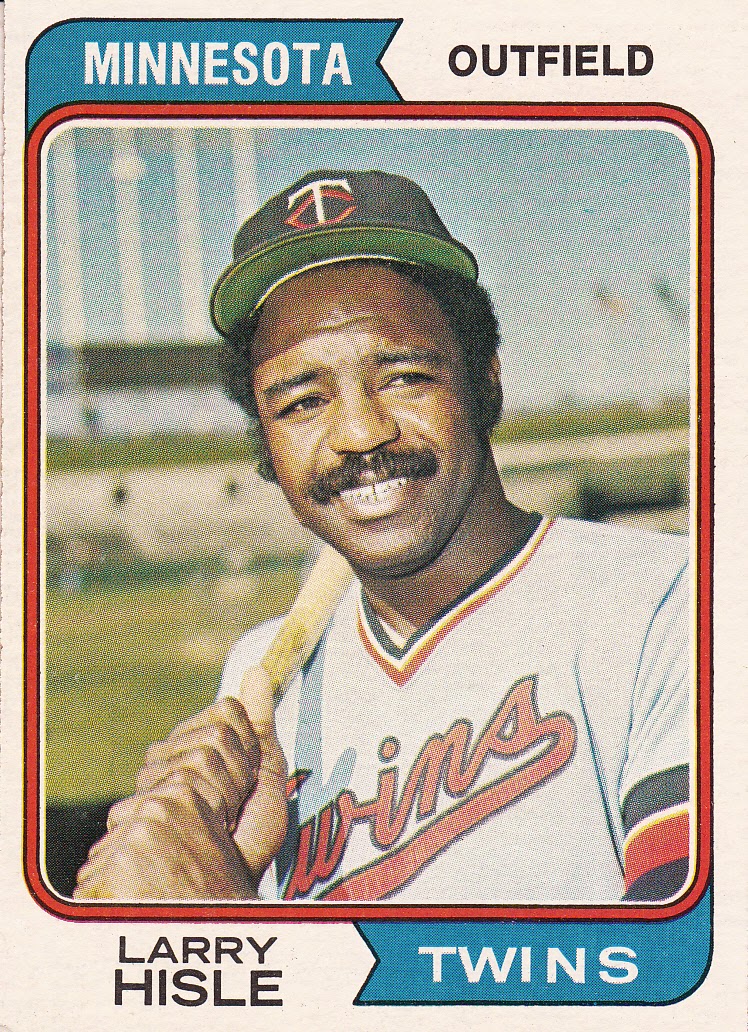
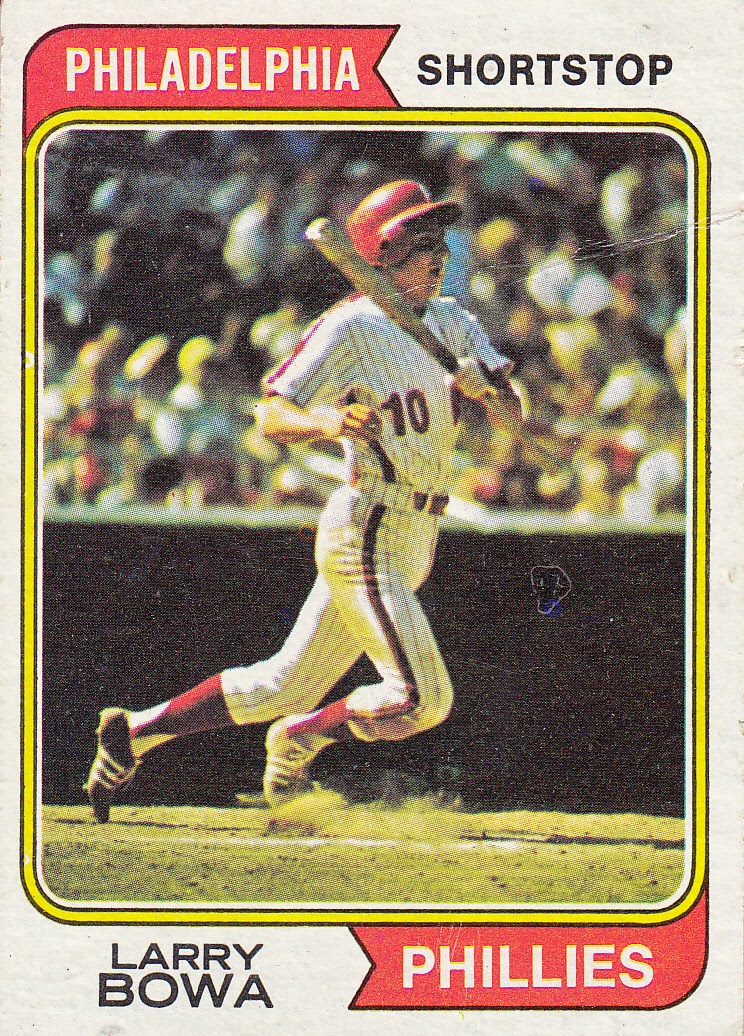
The big stash, though, came from 1974.  I picked up the unnumbered green team checklist for the Brewers along with George Scott, the Team card (which is miscut, so I can still use a better-centered version), Don Money, Bobby Mitchell, the Rookie Catchers card with one of my player collection guys Charlie Moore on it, the Rookie Pitchers with Kevin Kobel, the Rookie OF with Wilbur Howard, and Steve Barber just for my Brewers collection.  I'm down to just a couple of cards for 1974 for the Brewers as a result.

Here's the team card, which is pretty off-center:

After that, I started pulled other players, managers, and team cards.  There was a future Hall of Famer who also became a Brewer:

There were other future Brewers too:


Some team cards:


Managers:


Yeah, oops.  Grabbed two Weavers. 

I'm thinking I grabbed two Weavers future Brewer manager George Bamberger's inclusion on it.  Or I just lost track.

Finally, other players:

Miscut Maddox

Andre Thornton/Frank White rookie

Play at the Plate!


Two Hall of Famers


Two more Hall of Famers


Freisleben Washington Variation


Finally, there were some 1975 Topps and one 1976 Topps Traded too.  No minis, unfortunately, but definitely cool cards:


As you can see, I camped out in this vintage box to try to find cards I liked, cards I thought you guys and gals would like, and hopefully to pick up some trade bait as well.  If you see something you like, let me know.

And just think -- those cards were just one-third of the cards I dug out of the dime boxes!

Hope y'all have a great Father's Day!